10 Maintenance Habits That Save Owner-Ops $10K+ Per Year
The short answer
Disciplined owner operator truck maintenance — oil at 25K miles, weekly tire-pressure checks, on-schedule greasing, and timely fuel/air/coolant service — cuts annual repair spend from roughly $22,000 down to $12,000–$14,000. Every $1 of preventive maintenance saves $5–$10 in emergency repairs, plus the lost loads and tows a breakdown costs. The 10 habits below are the routine the most profitable owner-ops actually follow.
Prevention vs. Repair: The $10,000 Math
A $300 oil change every 25,000 miles prevents a $15,000 engine rebuild. A $150 coolant flush prevents an $8,000 head gasket failure. A $50 tire pressure check prevents a $600 blowout (plus the tow, the lost revenue, and the potential cargo damage claim). Every dollar spent on preventive maintenance saves $5-$10 in emergency repairs.
Yet most owner-operators skip or delay maintenance to "save money." In 2025, the average owner-op spent $22,000 on maintenance and repairs. The ones who followed strict preventive schedules? $12,000-$14,000. That's a $10,000 difference that goes straight to your bottom line — and it's the difference between a profitable year and barely breaking even.
At CDL Agency, we work with hundreds of owner-operators and the pattern is clear: the drivers making the most money (see our guide on maximizing owner-operator earnings) are also the most disciplined about maintenance. It's not a coincidence. Breakdowns kill your income — not just the repair bill, but the lost loads, the towing fees, and the detention penalties while you sit in a shop.
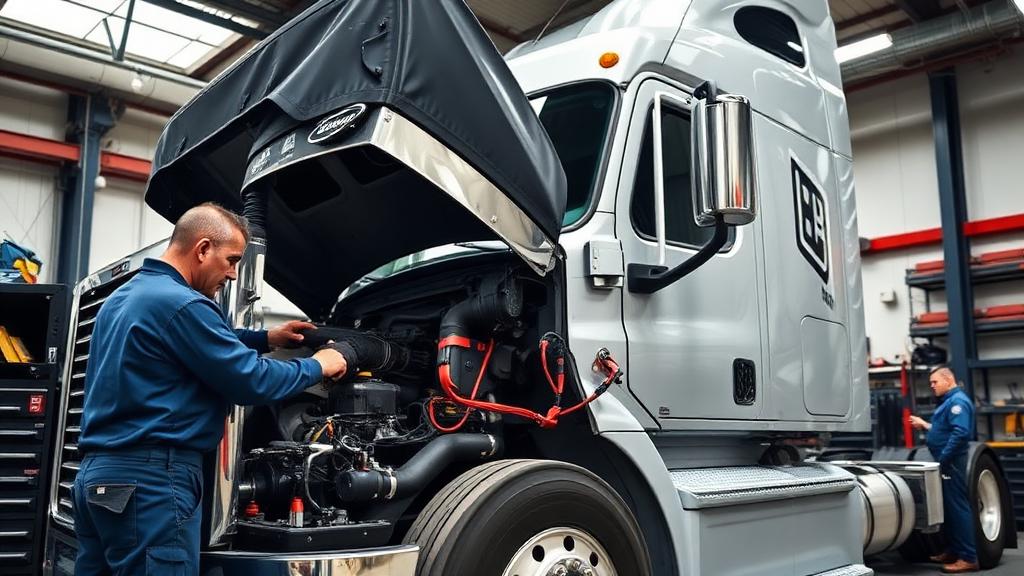
Habit #1: Oil Changes Every 25K Miles — No Excuses
Not 30K. Not 35K. Not "when the light comes on." Not "when I get around to it." Set a reminder in your phone at 24,000 miles so you can plan the stop. Use quality full-synthetic oil — the $40-$60 premium over conventional oil pays for itself 100x in engine longevity.
At every oil change, also replace the oil filter and inspect the drain plug and gasket. A $5 drain plug gasket prevents a slow oil leak that can destroy a $15,000 engine. Request an oil analysis ($25-$30) annually — it tells you exactly what's happening inside your engine before problems become visible.
Habit #2: Check Tire Pressure Weekly
Under-inflated tires waste 3-5% of your fuel — at current diesel prices and 120,000 miles/year, that's $3,000-$5,000/year wasted. They also wear out 25% faster, meaning you're replacing $400-$600 tires thousands of miles earlier than necessary.
Buy a quality digital tire gauge ($30-$50) and check all 18 tires every Monday morning before your first load. Inflate to manufacturer specs — not more, not less. Check tread depth monthly with a penny test. Replace tires at 4/32" tread depth for drives and 2/32" for steers, not at DOT minimum. A blowout at highway speed is one of the most dangerous events in trucking.
Habit #3: Grease Everything on Schedule
Chassis components, U-joints, 5th wheel, king pins, slack adjusters, cam bushings — follow the manufacturer's grease schedule exactly. A $2 squeeze of grease in a fitting prevents a $2,000 U-joint replacement or a $3,000 kingpin rebuild.
Most components need greasing every 10,000-15,000 miles or at every oil change — whichever comes first. The 5th wheel should be greased weekly if you're dropping and hooking frequently. Keep a grease gun in your truck and do it yourself to save shop fees.
Habit #4: Air Filters at 30K-50K Miles
A clogged air filter reduces fuel economy by 3-5% and puts extra stress on your turbocharger. A $40 filter replacement every 30,000-50,000 miles (check your manufacturer's recommendation) saves hundreds in fuel costs and prevents premature turbo failure — a repair that runs $2,500-$5,000.
Check your air filter monthly by holding it up to light. If you can't see light through it, it's time to replace regardless of mileage. Dusty conditions (construction zones, gravel roads) clog filters faster.
Habit #5: Inspect Brakes Every 10K Miles
Don't wait for an inspection station to tell you your brakes are at 30%. Replace pads at 50% life — it's cheaper than replacing drums and rotors that get damaged by worn pads. An out-of-service violation for brakes costs you $500-$1,000 in lost time plus the fine plus the repair plus the CSA points on your record.
Learn to measure brake adjustment yourself. Check slack adjuster travel at every pre-trip — it takes 30 seconds. If any brake has more than 1" of free play, get it adjusted immediately. Brake failures cause more truck accidents than any other mechanical issue.
Habit #6: Coolant Flush Every 2 Years
Old coolant becomes acidic over time and eats gaskets, water pumps, and radiator cores from the inside. A $150-$200 coolant flush every 2 years (or 300,000 miles) prevents $5,000-$10,000 in cooling system failures. Use the coolant type specified by your engine manufacturer — don't mix coolant types.
Between flushes, check coolant level and condition monthly. Use test strips ($5 for a pack of 50) to check pH and additive levels. Top off with the correct premixed coolant — never add straight water.
Habit #7: Fuel Filter Changes Every 15-20K Miles
Dirty fuel is the #1 killer of fuel injectors. A $30-$50 fuel filter replacement every 15,000-20,000 miles prevents $3,000-$5,000 in injector replacements. Modern diesel engines are extremely sensitive to fuel contamination — even small amounts of water or debris in your fuel can damage injectors.
Carry a spare fuel filter in your truck. A clogged fuel filter on the road means loss of power, rough running, and potentially being stranded until a mobile mechanic arrives. Swapping it yourself takes 15 minutes and saves a $200+ roadside service call.
Habit #8: Check Belts and Hoses Monthly
A serpentine belt costs $50-$75 to replace proactively at a shop. When it snaps on I-80 at 2 AM in Nebraska? $500+ in emergency towing plus $200+ in emergency repair labor plus a full day of lost revenue. A $20 radiator hose replaced during a scheduled service prevents a $3,000 overheating incident that can crack your head gasket.
During your monthly inspection, look for cracks, fraying, glazing, or soft spots on belts and hoses. Squeeze coolant hoses — they should feel firm, not spongy. Replace anything that looks questionable. The cost of "peace of mind" replacement is always less than emergency replacement.
Habit #9: Keep Detailed Maintenance Records
Track every maintenance event with date, mileage, cost, parts used, and shop name. This data serves multiple purposes:
- Predict failures: When you know your alternator lasted 180,000 miles last time, you can proactively replace it at 170,000 miles this time
- Prove maintenance history: When selling your truck, documented maintenance history adds $5,000-$10,000 to resale value
- Tax deductions: Every maintenance expense is deductible — but only if you have documentation
- Warranty claims: If a part fails prematurely, records prove you maintained it properly
Use an app like Fleet Complete, Fleetio, or even a simple spreadsheet. The 5 minutes it takes to log each maintenance event saves you thousands.
Habit #10: Build a Relationship with One Great Mechanic
Find a good independent diesel mechanic and be loyal. Don't shop around for the cheapest price every time — build a relationship with someone you trust. A mechanic who knows you and your truck will:
- Prioritize you when you have emergencies (regulars get bumped to the front of the line)
- Give honest assessments ("this can wait 10,000 miles" vs. "we need to do this now")
- Often charge less than dealerships (independent shops run 20-40% cheaper for the same work)
- Notice problems early because they know your truck's history
- Recommend preventive work that saves you money long-term
A trusted mechanic is worth their weight in gold. Ask other owner-operators in your area for recommendations. When you find a good one, treat them well — pay promptly, be on time for appointments, and refer other drivers to them.
Your Printable Maintenance Calendar
Tape this schedule to your dash or save it in your phone:
- Daily (pre-trip): Lights, tires (visual), fluid levels, air system, brakes
- Weekly: Tire pressure check, grease 5th wheel, clean mirrors/lights
- Monthly: Belts, hoses, battery terminals, air system drain, coolant level, air filter visual check
- Every 15-20K mi: Fuel filters, transmission fluid check
- Every 25K mi: Oil change, oil filter, lube chassis
- Every 30-50K mi: Air filter replacement, transmission service, DEF filter
- Every 50K mi: Full brake inspection, wheel seal check
- Annually: Coolant test, A/C service, full electrical system check, annual DOT inspection
- Every 2 years: Coolant flush, full brake reline, suspension inspection
The total cost of following this schedule is $12,000-$14,000/year. The cost of NOT following it? $22,000+ in reactive repairs, plus lost revenue from breakdowns, plus the stress of never knowing when your truck will leave you stranded.
Want to drive for carriers that maintain their equipment properly? CDL Agency partners with carriers who invest in their fleets and treat their equipment — and their drivers — as valuable assets. Find your next carrier →
Looking for a better seat?
Tell us what you drive — we match you to carriers hiring your equipment and a recruiter calls you back.
Frequently Asked Questions
How much should an owner-operator budget for truck maintenance per year?+
Plan for about $12,000–$14,000 a year if you follow a strict preventive schedule. Owner-ops who skip or delay maintenance average around $22,000 in reactive repairs, so a maintenance reserve of roughly $0.10–$0.15 per mile keeps you covered.
How often should you change the oil in a semi truck?+
Every 25,000 miles with quality full-synthetic oil — not 30K, 35K, or 'when the light comes on.' Replace the oil filter and inspect the drain plug gasket at every change, and run an annual oil analysis to catch engine problems early.
What is the most important preventive maintenance for a semi truck?+
Oil changes, weekly tire-pressure checks, scheduled greasing, and timely fuel and air filter changes deliver the biggest savings. They prevent the costliest failures — engine, turbo, and injector damage — and avoid out-of-service brake violations.
Is it cheaper to maintain a truck yourself or use a shop?+
Doing routine items yourself — greasing, filter swaps, fluid checks, pre-trip brake checks — saves shop labor and roadside fees. For bigger jobs, build a relationship with one trusted independent diesel mechanic, who typically runs 20–40% cheaper than a dealership.
How much can preventive maintenance actually save an owner-operator?+
About $10,000 a year versus reactive repairs, before counting lost loads, towing, and detention from breakdowns. Every dollar spent preventively saves an estimated $5–$10 in emergency repair costs.
Keep reading
Written by
Andrius Pletniovas — Founder, CDL Agency
Andrius Pletniovas (Andrius Digital) is the founder of CDL Agency, a truck-driver recruiting and marketing company that has placed 3,000+ CDL drivers for 50+ carriers across the U.S. He writes about driver recruiting, retention, and the trucking market from running the agency every day.
More about Andrius →Official personal website →
Want more like this?
Join 2,500+ carriers & drivers getting weekly insights.